I am an undergraduate at Princeton University with interests in machine learning, multimodal reasoning, and data-centric AI. My work focuses on evaluating model behavior, understanding reasoning limitations, and building robust benchmarks.
Stay tuned...
See ADAM
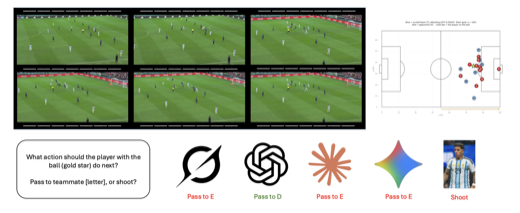
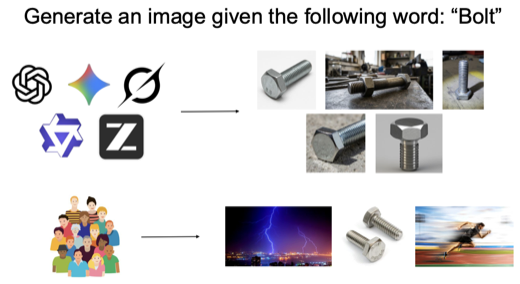
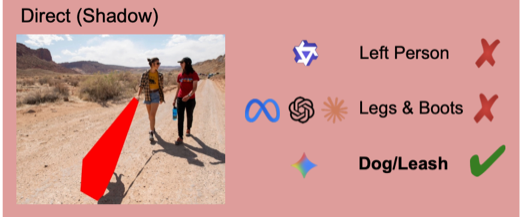
Investigated whether vision-language models actually use the specific visual clues needed to answer a question, rather than relying on surrounding context or learned patterns. Showed that current models struggle far more than humans when tasks require extracting exact information from subtle cues such as shadows and reflections.
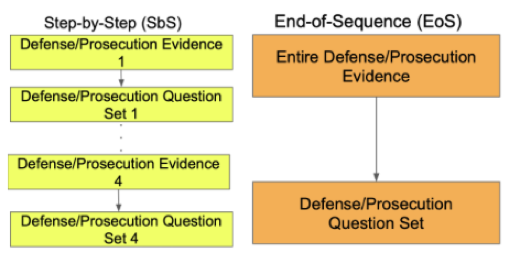
Investigated how response structure affects positional bias in large language models, revealing systematic differences between human and model reasoning.
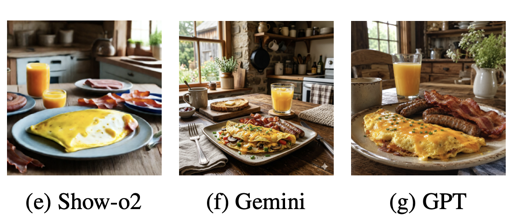
PaperInvestigated model-of-origin attribution in unified model-generated images, demonstrating near-perfect separability across models. Showed that attribution remains robust to corruptions and domain shifts, revealing consistent model-specific visual signatures.
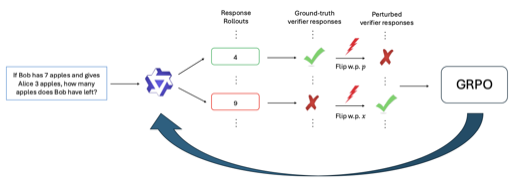
PaperInvestigated whether additional reinforcement learning compute can compensate for imperfect automated feedback during language model training. Showed that scaling compute only partially offsets noisy supervision, with persistent performance gaps and stronger degradation from missing correct rewards than from rewarding incorrect ones.
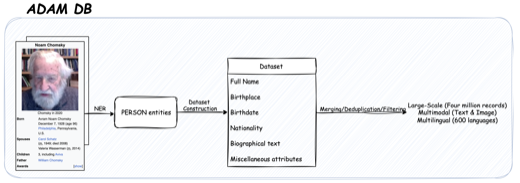
Introduced ADAM, a large-scale multilingual and multimodal framework for evaluating biographical reasoning in MLLMs. Showed that retrieval via AdamRAG significantly improves accuracy, especially for lesser-known individuals, while highlighting persistent challenges tied to popularity and reasoning complexity.
PaperAnalyzed over 9,000 Princeton University senior theses using NLP to track changes in length, readability, and content over a decade. Found that theses have become slightly shorter and more complex, with no clear evidence of increased AI-generated writing despite the rise of tools like ChatGPT.
ArticleAnalyzed major declaration patterns at Princeton University, showing that STEM fields, especially natural sciences and engineering, see significant drop-off from intended to declared majors. Findings suggest early coursework and perceived difficulty drive switching, while social sciences tend to retain or even gain students over time.
ArticleLed the associate director position and made 6 puzzles over my time there
Puzzles